Most practitioners have sat across from a patient who is genuinely, debilitatingly fatigued and watched their routine pathology come back unremarkable. No anaemia. Thyroid within range. Fasting glucose fine. And yet the person in front of you can barely get through a workday, crashes after exercise, and hasn't felt well in years.
This is where Organic Acids Testing earns its place in clinical practice.
Organic acids are small compounds produced as by-products of normal cellular metabolism. Under healthy conditions, they're generated and cleared efficiently. But when the underlying machinery starts to struggle through mitochondrial stress, nutrient insufficiency, oxidative load, dysbiosis or chronic sympathetic activation, these metabolites accumulate and spill into the urine. That pattern of accumulation tells a story that routine bloods simply aren't designed to tell.
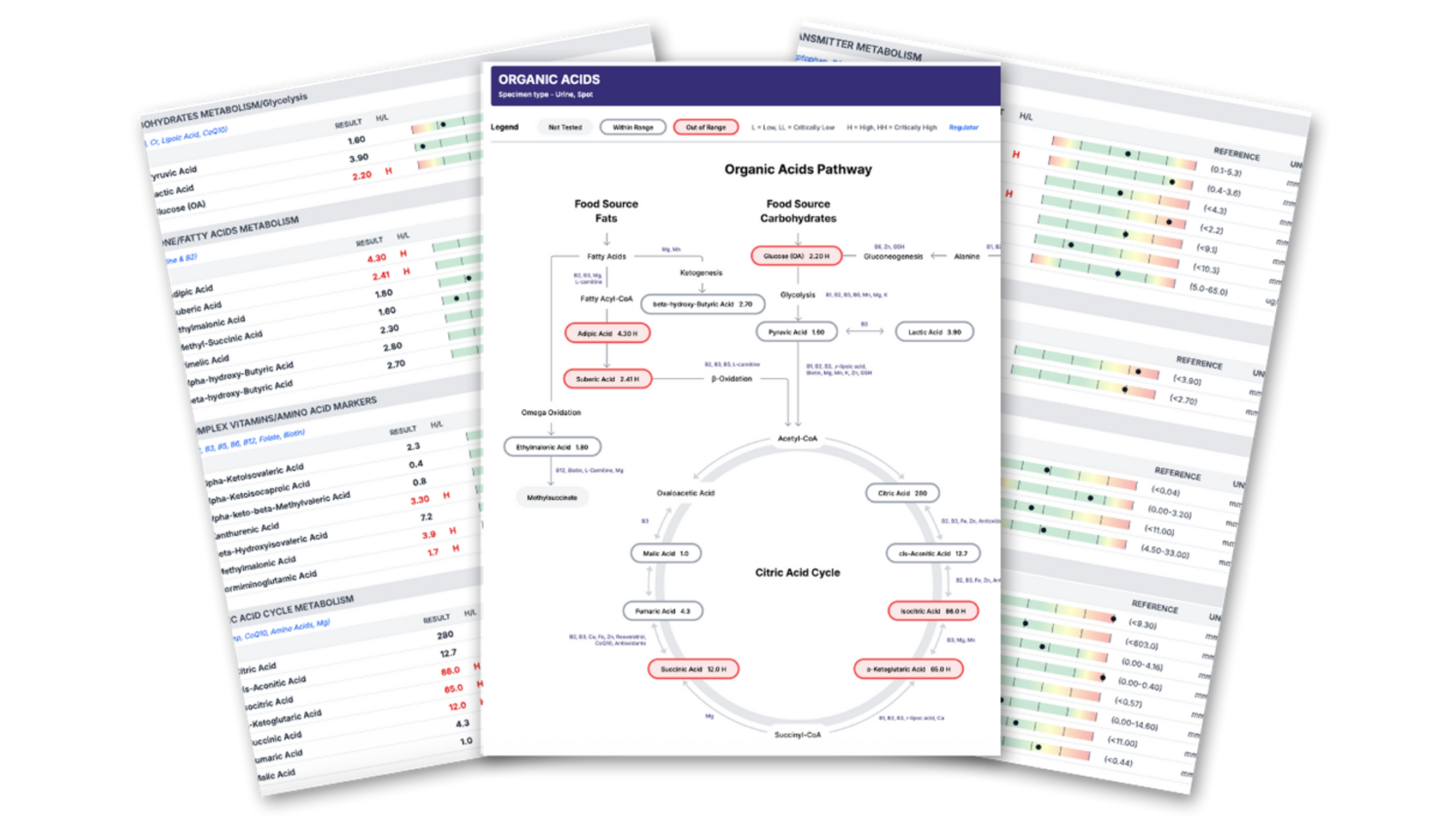
NutriPATH's Organic Acids Test covers more than 120 analytes across 11 clinical domains, including mitochondrial energy production, fatty acid oxidation, oxidative stress, neurotransmitter metabolism, detoxification capacity and microbial activity. The updated report includes a domain summary page for rapid pattern recognition, with quantitative results, graphical indicators and interpretation notes for elevated findings.
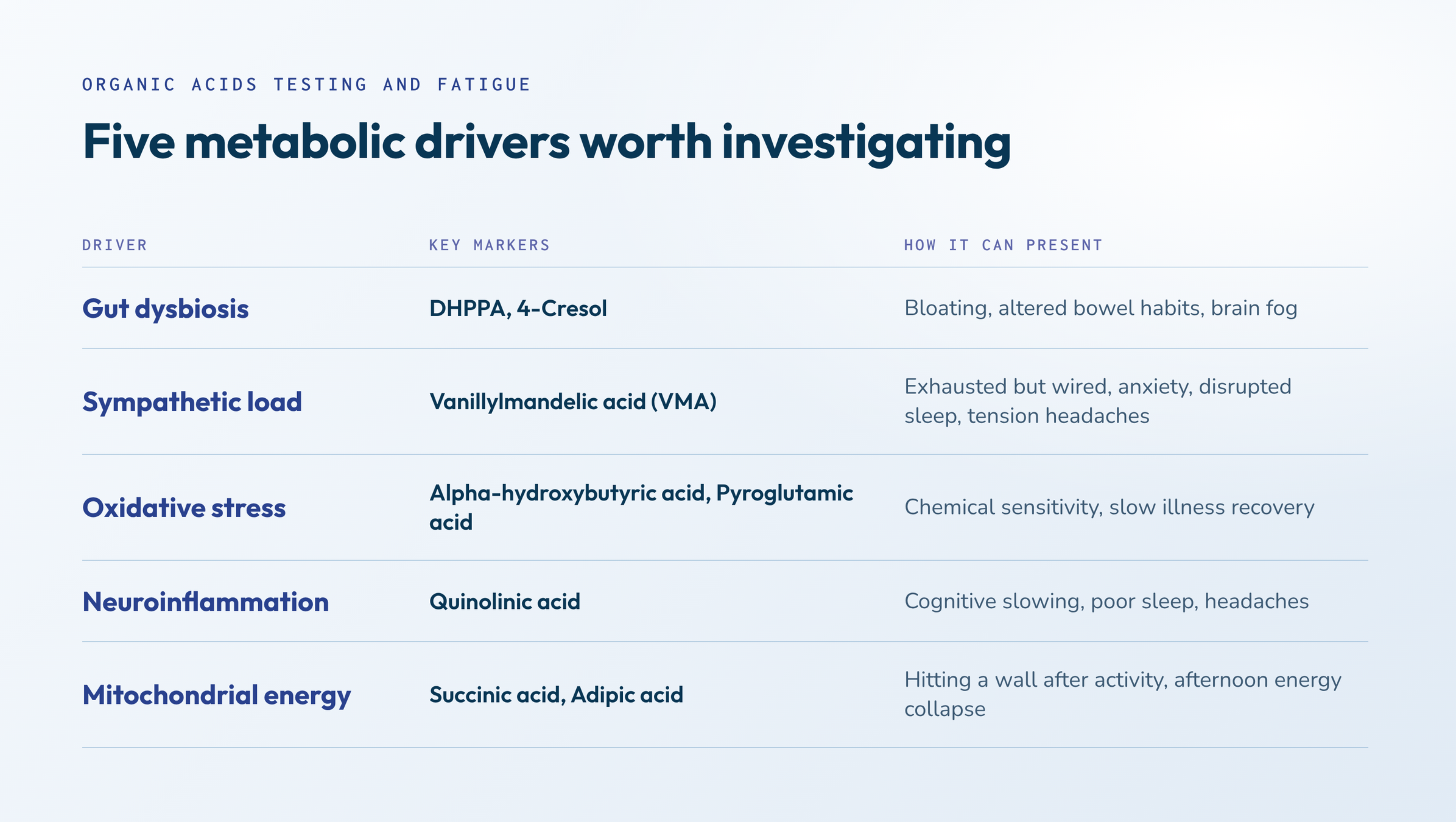
For practitioners working with persistent fatigue, here are the domains and markers worth understanding.
The Mitochondrial Picture
Fatigue with a mitochondrial driver tends to have a particular quality. Patients describe it as a kind of depletion rather than sleepiness and freuqently report hitting a wall after physical activity, or their energy collapsing in the afternoon regardless of how much they slept.
Two markers are particularly informative here.
Succinic acid is a Krebs cycle intermediate. Elevated levels may occur with nutritional enzyme inhibitions, inherited low-activity variants, high precursor load, or inhibition at complex II of the electron transport chain. Chronically elevated succinate can increase oxidative stress, with the clinical picture reflecting that inefficiency: reduced stamina, poor recovery, a sense of running on empty.
Adipic acid tells a different story. High levels can occur when L-carnitine insufficiency inhibits normal beta-oxidation, pushing fatty acid metabolism toward the costlier omega-oxidation pathway. Phthalate exposure, high-fat or ketogenic diets, type II diabetes and increased gut permeability can all drive adipate up. Key cofactors to consider include riboflavin, niacin and L-carnitine. (Holden, 2024)
Oxidative Stress and Glutathione Demand
Chronic oxidative stress is one of the more under-assessed contributors to fatigue, rarely visible on standard pathology panels.
Alpha-hydroxybutyric acid is an early signal. Elevated levels are associated with increased oxidative stress and reduced insulin sensitivity, and are commonly seen in metabolic syndrome or type II diabetes when glycaemic control is beginning to slip. Low biotin has also been linked to elevated levels and insulin dysregulation. (Cobb, 2016)
Pyroglutamic acid reflects glutathione recycling directly. It rises as oxidative stress increases and glutathione turnover accelerates. High downstream glutamate or glutamine can inhibit its further breakdown, and elevated Firmicutes in the gut microbiome may also contribute. Clinically, this pattern tends to surface alongside chemical sensitivity, slow illness recovery, and a general sense that resilience has quietly eroded.
The Kynurenine Pathway and Neuroinflammation
Only around 5% of tryptophan is converted into serotonin. The majority moves through the kynurenine pathway to synthesise NAD+, a cofactor involved in more than 200 biochemical reactions. When downstream blocks, enzyme inhibitions or elevated precursors are present, quinolinic acid accumulates. Phthalate exposure can also disrupt this pathway.
Quinolinic acid binds to NMDA and nicotinic acetylcholine receptors in the central nervous system, contributing to glutamate neurotoxicity and neuroinflammation. Clinically: cognitive slowing, poor sleep, headaches and the presentation most practitioners will recognise as the "wired but tired" patient.
When quinolinate exceeds kynurenate, systemic or neuroinflammation is likely. The therapeutic focus shifts toward supporting NAD+ synthesis and reducing inflammatory load. Because lactate and pyruvate interconversion is NAD+ dependent, reviewing these analytes alongside quinolinate adds useful context. (Hestad, 2022)

Sympathetic Load and Catecholamine Metabolism
Vanillylmandelic acid (VMA) is the end-stage metabolite of norepinephrine and epinephrine, with over 90% derived from liver catabolism. Elevated levels can reflect precursor excess, inhibited breakdown, or sustained sympathetic activation from physical or psychological stress. Elevated VMA alongside high methylmalonate, quinolinate and pyroglutamate, with low cis-aconitate and isocitrate, may point to poor antioxidant status as a contributing factor.
These patients present in a contradictory way: exhausted but wired, fatigued but unable to rest. Anxiety, disrupted sleep, tension headaches and a pervasive sense of being switched on without obvious cause are common. Supporting catecholamine clearance and parasympathetic restoration is often central to moving them forward.
The Gut Connection
DHPPA is primarily produced by Clostridia spp. through polyphenol fermentation. It carries antioxidant properties, but both elevated and low levels can indicate dysbiosis depending on the broader clinical picture.
4-Cresol, when elevated, suggests Clostridioides difficile overgrowth. C. difficile produces 4-cresol as an antimicrobial compound to crowd out competing species. Elevated 4-cresol can inhibit dopamine-beta-hydroxylase, disrupting dopamine metabolism, and making it worth cross-referencing with VMA and homovanillate.
When these microbial markers are raised, the picture often includes bloating, altered bowel habits and brain fog alongside fatigue. Dysbiosis-driven fatigue tends to respond poorly to energy-focused interventions alone. (Preez, 2018)

Putting It Together
The value of Organic Acids Testing in a fatigue presentation is not in any single marker. It is in the pattern. Mitochondrial dysfunction, oxidative stress, neuroinflammation, sympathetic overdrive and gut dysbiosis rarely present in isolation. They interact, reinforce each other and compound the clinical picture in ways that make a single-system approach inadequate.
For practitioners looking to move beyond "normal bloods, unexplained fatigue" and into a functional understanding of what is actually driving the presentation, Organic Acids Metabolomic Mapping offers a level of metabolic insight that routine pathology simply is not designed to provide.
It is not about finding a diagnosis. It is about understanding the terrain.
REFERENCES
Holden - PMID: 32727475
Cobb - PMID: 27208342
(Hestad, 2022) - PMID: 35883554
(Preez, 2018) - PMID: 30572962




 Jacqui Evans, Clinical Nutritionist: Oct 27, 2026, 12:11:38 PM